
Posted by I4C on 30th Jun 2026
The Ultimate Summer BBQ Guide: Professional Chef Tips for Better Barbecues
Professional Chef Tips for Better Barbecues, Bigger Flavours & Outdoor Cooking Success
Everything you need to know about cooking outdoors this summer, from choosing the right barbecue and mastering fire to perfectly cooked steaks, juicy burgers, flavour-packed marinades and the simple professional techniques that transform good barbecues into unforgettable ones.
Why Trust This Guide?
There are thousands of barbecue recipes online. Countless videos promise the "perfect steak", social media is full of quick tips, and every summer supermarkets publish their own barbecue guides.
So why should you read this one? Because this guide isn't based on trends or internet hacks. It's built around the techniques professional chefs use every day.
At Infusions4Chefs, we work alongside restaurants, cafés, hotels and food businesses across the UK, supplying many of the ingredients and equipment used in professional kitchens. Through our sister businesses, ICE Restaurant and ICE Cook School, we also spend every week cooking, teaching and talking about food with people who simply want to become better cooks.
One thing becomes obvious very quickly. The best barbecues rarely come from expensive equipment or complicated recipes. They come from understanding a few simple principles.
- How to control heat.
- When to season.
- Why resting meat matters.
- How smoke affects flavour.
- When to use a sauce and when not to.
Once you understand those fundamentals, everything becomes easier. Whether you're cooking burgers for the family, hosting friends on a warm summer evening or smoking brisket over charcoal all afternoon, the same professional techniques apply. That's exactly what this guide is here to teach.
What You'll Learn
By the time you've finished reading, you'll know:
- How professional chefs manage heat instead of chasing flames.
- Which barbecue is right for your style of cooking.
- How to cook steak, burgers, chicken, pork and lamb with confidence.
- Why vegetables deserve just as much attention as meat.
- When to use a dry rub, a marinade or a finishing sauce.
- The temperatures that remove the guesswork from barbecuing.
- The mistakes that ruin most home barbecues—and how to avoid them.
- Which ingredients and equipment genuinely make outdoor cooking easier.
Along the way we'll also recommend some of the ingredients, seasonings, sauces and equipment we genuinely enjoy using ourselves. Every recommendation appears because it has a purpose, not because it's fashionable.
Great BBQs Aren't About Luck
If you've ever stood next to somebody who seems able to produce perfectly cooked steaks, juicy burgers and beautifully charred vegetables every single time, it's easy to assume they've simply got a natural talent for barbecuing.
In reality, they're almost certainly doing something much simpler: They're following a process.
Professional chefs don't approach a barbecue any differently from how they approach restaurant service. They prepare ingredients before they cook, they understand where the hottest parts of the grill are, they know when to move food away from direct heat, and they cook methodically rather than reacting to whatever the flames are doing.
That's why their results are consistent. The barbecue itself is only part of the equation. The real skill comes from understanding heat.
Unlike your kitchen oven, a barbecue is constantly changing. Charcoal shifts, weather affects temperature, fat causes flare-ups and every time the lid is lifted, valuable heat escapes.
Rather than fighting those changes, experienced barbecue cooks learn to work with them.
One of the biggest misconceptions is that large flames create better flavour. They don't.
Flames usually mean fat is dripping directly onto the fire. While they might look impressive, they're far more likely to burn the outside of your food before the inside has had a chance to cook properly.
The rich savoury flavour that makes barbecue food so satisfying actually comes from controlled heat.
As meat, fish and vegetables cook, natural sugars and proteins react with the heat to form a deeply browned crust packed with flavour. This is known as the Maillard reaction, and it's responsible for the colour, aroma and taste that people associate with great barbecued food. Professional chefs spend far more time creating those conditions than they do chasing dramatic flames.
Five Habits Every Great BBQ Cook Shares
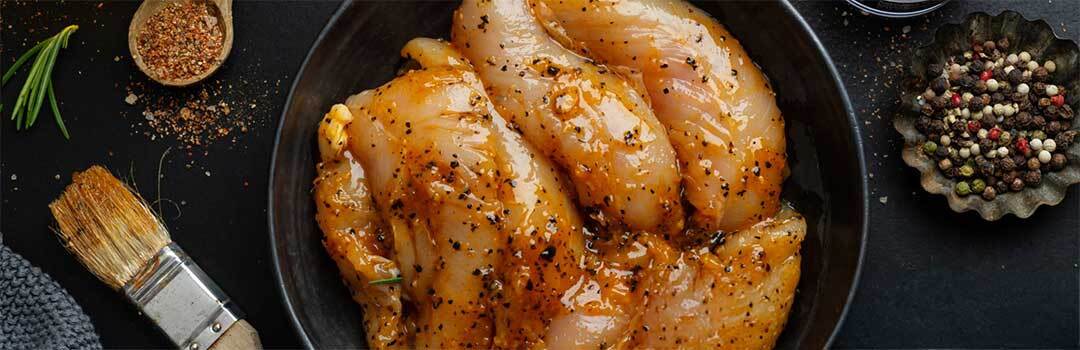
Over the years, we've noticed the same habits appearing time and time again. Whether it's a restaurant chef cooking over charcoal or someone mastering their first ceramic grill, the principles rarely change.
- They prepare before they cook: everything is ready before the barbecue reaches temperature.
- They cook using different heat zones: not everything belongs directly above the hottest coals.
- They season with purpose: simple ingredients, used well, almost always outperform complicated recipes.
- They trust the process: they don't constantly move food around the grill.
- They always let meat rest: some of the best cooking happens after food leaves the barbecue.
Choosing the Right BBQ: It's About More Than the Grill
Ask ten barbecue enthusiasts which barbecue you should buy, and you'll probably get ten different answers.
Some will never cook on anything other than charcoal. Others love the convenience of gas. Increasingly, many serious outdoor cooks are choosing ceramic grills or barrel cookers because of their incredible versatility.
The truth is that each type of barbecue has its strengths. The right choice depends less on which is "best" and more on how you enjoy cooking.
A family barbecue on a Tuesday evening has very different requirements to smoking a brisket for twelve hours on a Saturday. Understanding those differences will help you invest in equipment you'll actually enjoy using.
Charcoal Barbecues: The Classic Choice
For many people, barbecue and charcoal are inseparable.
There's something satisfying about lighting natural lumpwood charcoal, waiting for glowing embers to develop and cooking over real fire. It's this process that gives charcoal its unmistakable flavour and makes outdoor cooking feel like an occasion.
Charcoal rewards patience. It takes longer to reach cooking temperature than gas, but the payoff is rich smoky flavour and excellent versatility. From burgers and steaks to grilled vegetables and slow-cooked joints, charcoal is capable of producing exceptional results.
Ideal for:
- Steaks and burgers
- Traditional barbecue flavour
- Low-and-slow cooking
- Weekend entertaining
Gas Barbecues: Fast, Reliable and Convenient
Gas barbecues have come a long way in recent years. They're quick to light, easy to control and ideal for anyone who enjoys spontaneous outdoor cooking without waiting for charcoal to burn down.
For busy families or anyone cooking several times a week, gas often makes perfect sense.
While it doesn't naturally produce the same smoky flavour as charcoal, great ingredients and good cooking technique will still produce fantastic food.
Ideal for:
- Weeknight meals
- Larger gatherings
- Precise temperature control
- Fast cooking

Monolith Ceramic Grills: Outdoor Cooking Without Limits
If there is one style of barbecue that has transformed outdoor cooking over the last decade, it's the ceramic grill. At Infusions4Chefs, we're proud to stock the Monolith range because it offers something few other barbecues can: genuine versatility.
A Monolith isn't just a barbecue.
- It's a grill.
- A smoker.
- A pizza oven.
- A roasting oven.
- Even a bread oven.
Thanks to its thick ceramic construction, it retains heat incredibly efficiently, allowing you to cook low and slow for hours with very little fuel or reach temperatures above 350°C for beautifully blistered pizzas and intense steak searing.
Professional chefs value consistency above everything else, and that's exactly where ceramic grills excel.
Pit Barrel Cookers: A Different Way to Cook Over Fire
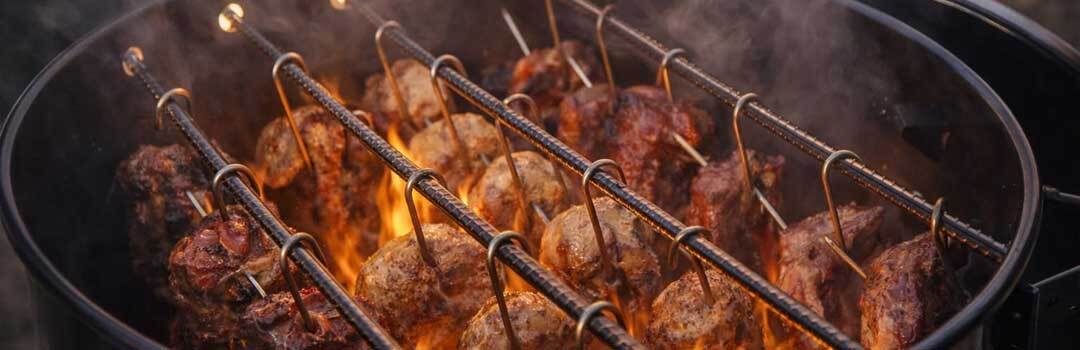
Some barbecues are designed for grilling. Others are designed to create unforgettable barbecue. The Pit Barrel Cooker does things differently.
Instead of placing food directly over the fire, ribs, brisket, pork shoulder and whole chickens are traditionally suspended from hooks inside the barrel. As heat and smoke circulate naturally, the meat slowly cooks while continuously basting itself, creating incredible tenderness and deep smoky flavour.
The beauty of the Pit Barrel is its simplicity. There's very little to adjust, very little to overthink and very little to go wrong. Light the charcoal, hang the food and let the cooker do what it was designed to do.
If authentic American-style barbecue appeals to you, few outdoor cookers are as enjoyable to use.
The Two-Zone Method
If you learn just one technique from this guide, make it this one.
Instead of spreading charcoal evenly across the barbecue, pile it onto one side.
This instantly creates two cooking areas.
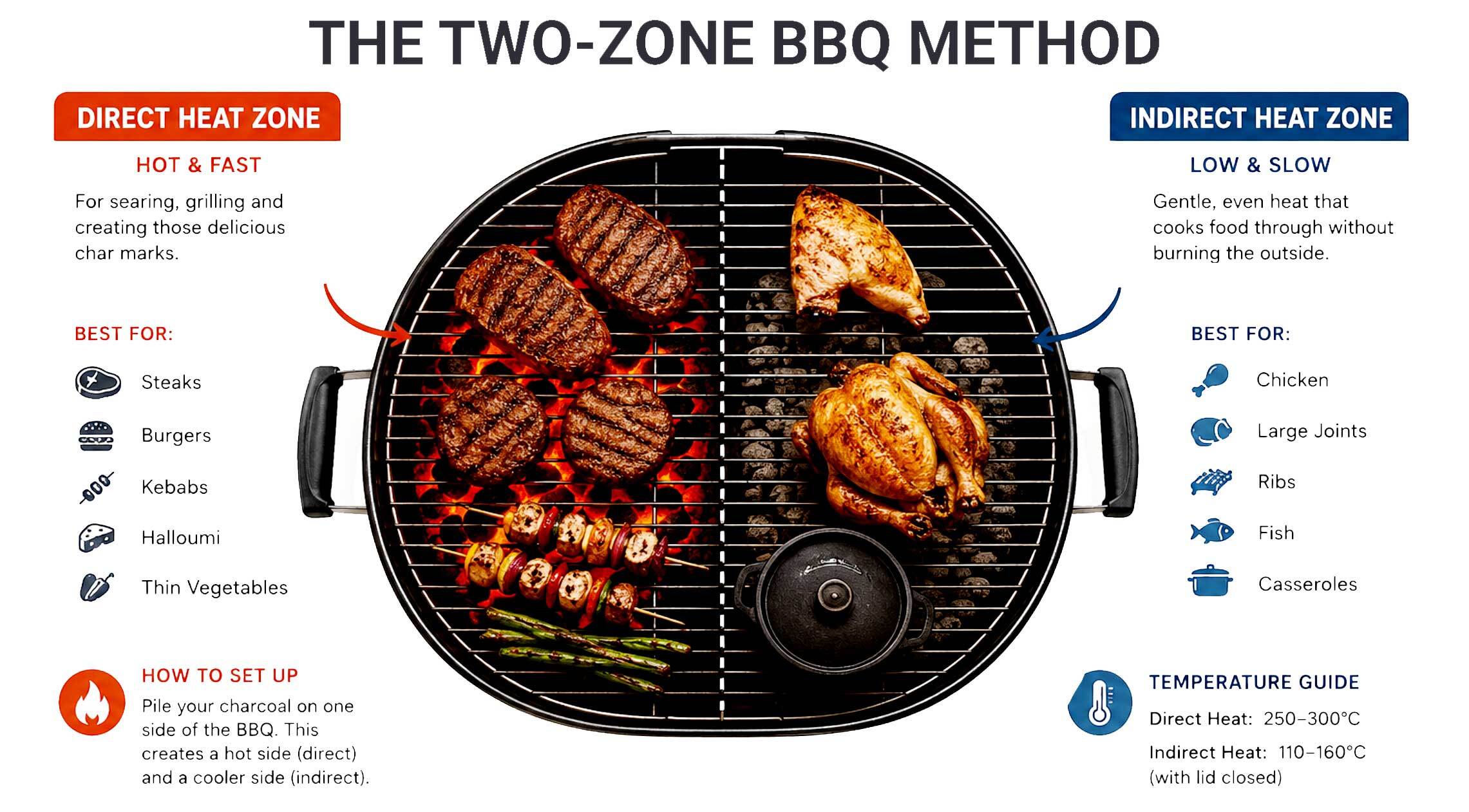
Direct Heat
The hottest part of the barbecue. Think of it as your frying pan.
Perfect for:
- Steaks
- Burgers
- Halloumi
- Skewers
- Thin vegetables
Indirect Heat
The cooler side of the barbecue. Think of it as your oven.
Ideal for:
- Chicken
- Thick sausages
- Pork shoulder
- Whole joints
- Delicate fish
The magic happens when you use both together. Sear over direct heat. Finish over indirect heat. Professional chefs do this constantly because it gives them complete control over every stage of cooking.
Stop Chasing Flames
One of the biggest myths in barbecuing is that bigger flames mean better flavour. They don't.
Flames are usually caused by fat dripping onto the coals, creating sudden flare-ups that burn the outside of food long before the inside is cooked. Instead, look for glowing red embers and steady, consistent heat.
If flames appear, don't panic. Simply move the food to the cooler side of the barbecue until they die down.
Lid Open or Lid Closed?
A surprisingly common question.
The simplest rule is this:
- If you're grilling, leave it open.
- If you're roasting, close it.
Steaks, burgers, skewers and vegetables usually benefit from cooking with the lid open over direct heat.
Whole chickens, pork shoulder, larger joints and thicker sausages cook much more evenly with the lid closed, allowing heat to circulate like a conventional oven.
Once you start thinking of your barbecue as both a grill and an oven, you'll unlock a huge range of cooking possibilities.
Cooking Meat Like a Professional Chef
The barbecue often becomes all about the meat, and for good reason. A perfectly cooked steak, a juicy burger or beautifully glazed chicken can be the centrepiece of a memorable summer meal.
The good news is that professional chefs aren't relying on secret techniques or expensive ingredients. They simply understand how different cuts behave over fire and know when to use direct heat, indirect heat and resting to their advantage.
Master those three things and you'll already be ahead of most barbecue cooks.
How to Cook the Perfect Steak on a BBQ
Few foods suit a barbecue better than a great steak. The combination of intense heat, smoke and caramelisation creates flavours that are difficult to achieve anywhere else.
The biggest mistake people make is cooking with flames instead of heat. Instead, wait until your barbecue is properly hot before placing the steak over direct heat. This creates a rich, deeply caramelised crust while keeping the inside tender and juicy. For thicker steaks, move them to the indirect heat zone after searing. This allows the centre to gently reach your preferred temperature without burning the outside.
Finally, and this is where patience really pays off, rest the steak for at least five minutes before slicing. During this time the juices redistribute throughout the meat, making every bite noticeably more tender.
How to BBQ Burgers Without Drying Them Out
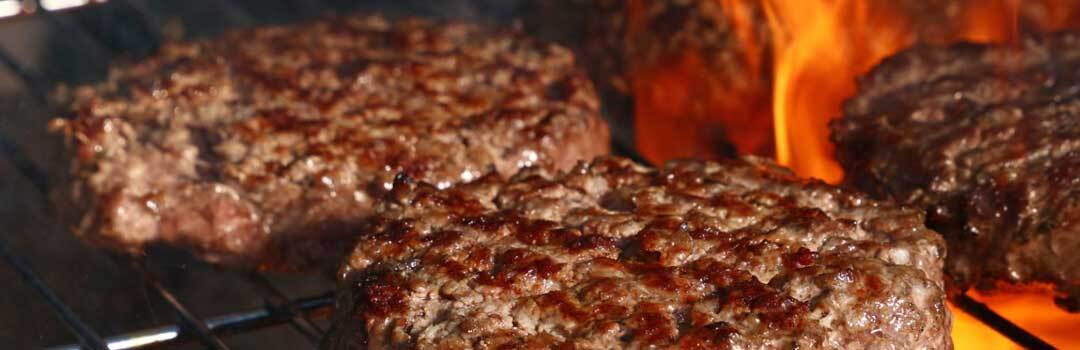
A great burger starts long before it reaches the grill. Choose minced beef with around 20% fat, as this keeps the burger moist while creating plenty of flavour. Once you've shaped the patties, avoid compacting the meat too firmly. A loosely packed burger stays lighter and juicier once cooked. When it reaches the barbecue, resist the temptation to press it down with a spatula. It might produce an impressive sizzle, but it's also forcing out the juices you've worked so hard to keep inside.
Cook over direct heat until a rich crust develops, then move to indirect heat if they need a little longer. Add cheese during the final minute and close the lid briefly to help it melt evenly. Toast your burger buns too. It's a small touch that adds texture and prevents them from becoming soggy.
Professional Tip: Build burgers after resting the meat for a couple of minutes rather than serving immediately. It helps everything stay together and keeps more juice inside the burger.
Used by our chefs for perfect burgers:
- Stokes Red Onion Marmalade 2.4kg
- Halen Mon Gherkin Relish 270g
- French’s American Classic Yellow Squeezy Mustard 226g
How to BBQ Chicken Properly
Chicken is one of the easiest meats to overcook. The outside colours quickly while the inside takes much longer to reach a safe temperature, leading many people to accidentally dry it out.
Professional chefs avoid this by cooking chicken in two stages. Start over indirect heat with the lid closed, allowing the meat to cook gently and evenly. Once it's almost cooked through, finish it over direct heat to crisp the skin and develop colour.
If you're using barbecue sauce, apply it during the final few minutes of cooking. Most sauces contain sugar, which burns surprisingly quickly if brushed on too early.
A digital thermometer removes all the guesswork. Once the centre reaches 75°C, the chicken is ready to rest before serving. We highly recommend the MEATER Plus Wireless Smart Meat Thermometer. Completely wireless, it allows you to monitor both the internal temperature of your food and the ambient temperature inside your barbecue from your smartphone. The MEATER Plus helps you achieve consistently excellent and safe results without constantly lifting the lid.
Used by our chefs:
- MEATER Plus Wireless Smart Meat Thermometer
- Essential Cuisine Street Food Chef Sauces
- Rio Pacific BBQ Sauces
Pork & Lamb: Perfect for Slow Cooking
If steak is all about speed, pork and lamb reward patience. Thicker pork cuts such as shoulder or ribs become incredibly tender when cooked slowly over indirect heat, especially in a Monolith Ceramic Grill or Pit Barrel Cooker.
Apply a dry rub several hours before cooking, allow the meat to slowly develop colour and finish with a glaze during the final stages if you enjoy a sticky, smoky finish.
Lamb is equally at home on the barbecue. Quick-cooking chops are fantastic over direct heat, while larger legs benefit from roasting with the lid closed before resting thoroughly.
Classic combinations such as rosemary, garlic and lemon remain favourites for good reason, but don't be afraid to experiment with cumin, coriander, smoked paprika or harissa-inspired spice blends.
Don't Forget to Rest Your Meat
Ask any professional chef what the most overlooked part of barbecuing is, and many will give the same answer:
Resting.
As meat cooks, the juices are driven towards the centre. Cut into it immediately and those juices end up on your chopping board instead of inside the meat. Allowing it to rest for just a few minutes gives those juices time to redistribute, producing noticeably more tender and flavourful results.
As a simple guide:
|
Meat |
Resting Time |
|
Steak |
5 - 10 minutes |
|
Burgers |
3 - 5 minutes |
|
Chicken |
5 - 10 minutes |
|
Pork Chops |
5 minutes |
|
Large Joints |
15 - 30 minutes |
It might feel like a long wait when everyone is hungry, but it's one of the easiest ways to improve almost every barbecue.
Beyond the Meat: Seafood, Vegetables & Summer Sides
One of the biggest trends in outdoor cooking over the last few years has been a shift away from barbecues being entirely centred around meat.
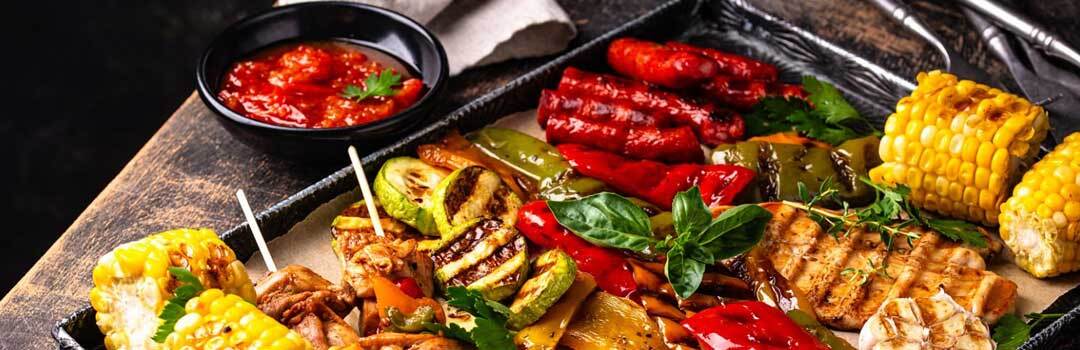
Professional chefs now treat vegetables, seafood and even fruit with exactly the same care as steaks and burgers, creating colourful dishes that bring freshness, balance and variety to the table. Cooking over charcoal naturally enhances sweetness, adds gentle smokiness and creates beautifully caramelised edges that simply can't be replicated in a conventional oven. In many cases, these dishes become the unexpected stars of the meal.
Why Seafood Loves the BBQ
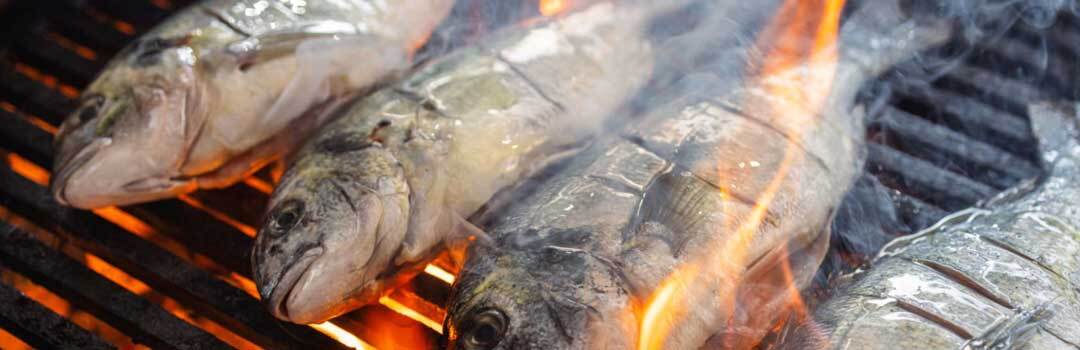
Fish and seafood are perfectly suited to barbecuing because they cook quickly and absorb subtle smoky flavours without needing complicated preparation. Firm fish such as salmon, monkfish and tuna are particularly forgiving, while prawns, scallops and squid need only a few minutes over the heat.
The biggest mistake people make is trying to turn seafood too early.
If the grill is properly preheated and lightly oiled, fish will naturally release when it's ready. Force it too soon and it will stick.
Keep the seasoning simple. A little olive oil, flaky sea salt, cracked black pepper and fresh lemon often produce better results than heavily spiced marinades.
Used by our chefs for BBQ seafood:
- Extra Virgin Olive Oil
- Halen Môn Sea Salt
- Poon’s London Premium First Extract Soy Sauce 250ml for Asian-inspired marinades
The Vegetables Every Chef Cooks on the BBQ
Great vegetables aren't a side dish. They're part of the main event.
Cooking over fire brings out natural sugars, creating rich caramelisation while adding just enough smokiness to transform everyday vegetables into something far more interesting.
Some of our favourites include:
- Sweetcorn
- Courgettes
- Aubergines
- Peppers
- Tenderstem broccoli
- Portobello mushrooms
- Asparagus
Lightly coat each vegetable with olive oil before seasoning and cook over direct heat until lightly charred but still retaining a little bite. Finish with flaky sea salt, chopped herbs and another drizzle of good olive oil just before serving. It's a simple technique that makes an enormous difference.
Halloumi Deserves a Place on Every BBQ
Halloumi has become one of the UK's favourite barbecue ingredients, and it's easy to see why. Its high melting point allows it to develop a beautifully golden crust while remaining soft and slightly springy in the middle.
Cook slices over direct heat for two to three minutes per side until lightly charred. Serve alongside grilled vegetables, fresh salads or tucked into warm flatbreads with roasted peppers and herbs. If you enjoy sweet and spicy flavours, finish with a drizzle of Roquito hot honey.
Don't Forget the Fruit
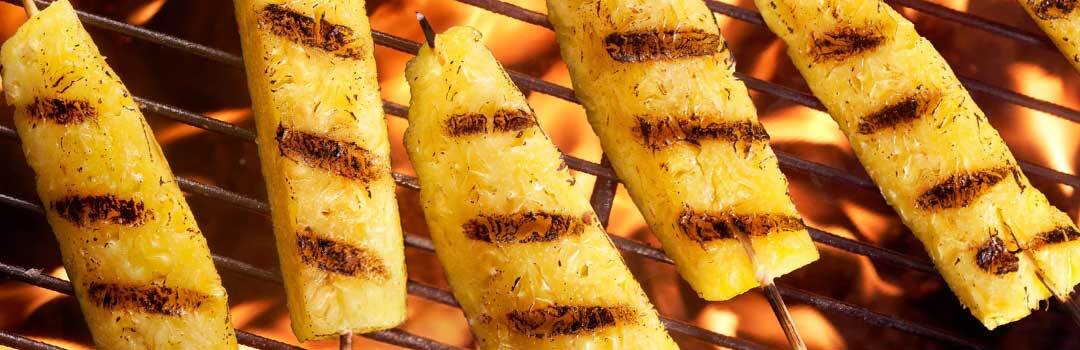
Fruit is probably the most overlooked ingredient on the barbecue. Yet it's also one of the easiest ways to finish a meal. As fruit cooks, its natural sugars caramelise, creating rich, jammy flavours with very little effort.
Some i4C favourites include:
- Peaches
- Pineapple
- Nectarines
- Watermelon
Serve warm with vanilla ice cream, thick Greek yoghurt or mascarpone. Grilled pineapple is equally at home alongside burgers, pulled pork and sticky barbecue chicken.
Finish Like a Chef
Professional chefs know that flavour isn't built only during cooking. Often the final few seconds before serving have the biggest impact. A pinch of flaky Maldon Sea Salt, a drizzle of Castillo de Canena extra virgin olive oil or a splash of aged balsamic vinegar can completely transform a finished dish. Fresh herbs, citrus zest, toasted seeds and cracked black pepper all add freshness without hiding the ingredient underneath.
Build Flavour Like a Professional Chef: Rubs, Marinades & BBQ Sauces
One of the biggest myths about barbecuing is that flavour comes from the sauce. In reality, professional chefs build flavour in layers. It starts with good ingredients, followed by careful seasoning, then a well-balanced rub or marinade, before finally adding a finishing sauce if the dish needs it. Each stage has a different purpose, and understanding when to use each one will transform your outdoor cooking. Think of it like seasoning a steak. You wouldn't cover a premium ribeye in thick barbecue sauce before you've even tasted it. The same principle applies across your entire barbecue menu.
Dry Rubs: Building Flavour from the Start
A dry rub is a blend of herbs, spices and seasonings that is applied before cooking. Unlike marinades, rubs don't add moisture. Instead, they create a deeply flavoured crust as the meat caramelises over the heat. The best rubs balance savoury, smoky, sweet and spicy notes without masking the natural flavour of the ingredient.
A classic BBQ rub often includes:
Dry rubs work brilliantly on:
- Pork shoulder
- Beef brisket
- Ribs
- Chicken thighs
- Sweetcorn
- Halloumi
Apply the rub at least 30 minutes before cooking, although larger cuts benefit from several hours in the fridge.
Marinades: Adding Depth, Not Hiding Flavour
A good marinade should complement the ingredient rather than overpower it. Most successful marinades contain three simple elements:
- Oil to carry flavour and prevent sticking.
- Acidity such as lemon juice or vinegar to brighten the dish.
- Seasoning including herbs, spices, soy sauce, garlic or mustard.
Different ingredients need different marinating times.
|
Ingredient |
Marinating Time |
|
Fish & Seafood |
20 - 30 minutes |
|
Vegetables |
30 - 60 minutes |
|
Chicken |
2 - 6 hours |
|
Pork |
4 - 12 hours |
|
Beef |
2 - 12 hours |
Leaving food in highly acidic marinades for too long can actually affect the texture, particularly with fish, so longer isn't always better.
BBQ Sauces: The Finishing Touch
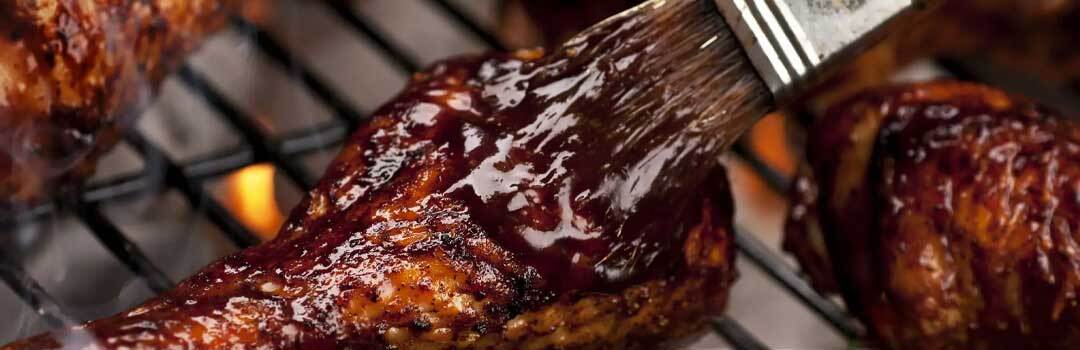
A great barbecue sauce should enhance the food, not dominate it. Most traditional barbecue sauces contain sugar, making them perfect for glazing during the final few minutes of cooking. Apply them too early and the sugars can burn before the food is ready.
Keep a little extra sauce on the table and let everyone add more to suit their own taste. This simple change produces cleaner flavours and far better caramelisation.
And don’t limit yourself to a classic BBQ sauce. Here is our run through of BBQ sauces inspired but global cuisines:
American Smokehouse: rich, smoky and slightly sweet flavours that work beautifully with brisket, ribs, burgers and pulled pork.
- Rio Pacific Hickory BBQ Sauce 5L
- French's Cattlemen's Kansas City Classic BBQ Sauce 2.15L
- Essential Cuisine Street Food Chef Memphis Champion BBQ Sauce 1L
Mexican-Inspired: bright, fresh flavours with just the right amount of heat. Perfect for grilled chicken, prawns, steak and corn on the cob.
- Cholula Chipotle Hot Sauce 150ml
- El Yucateco XXXtra Hot Habanero Sauce 120ml
- Slap Ya Mama Jalapeno Pepper Sauce 148ml
Korean & Asian-Inspired: sweet, savoury and packed with umami. Ideal for beef, pork, chicken and grilled vegetables.
- Stokes Korean BBQ Sauce 2kg
- Essential Cuisine Street Food Chef Korea Town Style Ketchup 1L
- Centaur Gochujang Korean Chilli Paste 575g
Layer Your Flavour Like a Chef
Professional chefs rarely rely on just one seasoning. Instead, they build flavour gradually.
For example, with chicken:
Season → Marinate → Cook → Glaze during the final few minutes → Finish with herbs and flaky sea salt
Or for a steak:
Sea Salt → Barbecue → Rest → Compound Butter → Flaky Sea Salt
Each stage contributes something different, resulting in food that's balanced, complex and never overwhelming.
A Final Thought on Flavour
The best barbecue food isn't overloaded with ingredients. It's thoughtfully seasoned.
When you begin with quality produce, cook over well-managed heat and build flavour one step at a time, you'll find that simple dishes often become the most memorable. That's exactly how professional chefs approach outdoor cooking, and it's a habit that's well worth bringing into your own garden.
Avoid These Common BBQ Mistakes
Even experienced barbecue cooks get caught out from time to time. The difference is that they know how to spot a mistake before it ruins the food. The good news? Most barbecue mishaps come down to a handful of simple habits that are easy to fix.
- Cooking Over Flames Instead of Heat
It might look impressive when flames leap up around your food, but they're usually doing more harm than good. Flare-ups happen when fat drips onto the coals or burners, causing intense bursts of heat that burn the outside of your food before the inside has cooked.
The Fix: Create two heat zones and move food away from direct flames whenever flare-ups occur. Aim for glowing embers rather than large flames.
- Not Preheating the BBQ
Putting food onto a cold barbecue almost guarantees sticking and uneven cooking. Whether you're using gas, charcoal or a ceramic grill, give it time to reach the correct temperature before adding food.
The Fix: Wait until charcoal is covered with a light layer of grey ash, or allow your gas barbecue to fully preheat with the lid closed.
- Turning Food Too Often
Constant flipping prevents proper caramelisation and can cause food to stick to the grill.
The Fix: Let the food cook undisturbed until it naturally releases before turning. In most cases, one turn is all that's needed.
- Forgetting to Rest Meat
One of the quickest ways to lose flavour is slicing into meat the moment it comes off the barbecue.
The Fix: Rest steaks for five to ten minutes, burgers for a few minutes and larger joints for at least 15 minutes before carving.
- Applying BBQ Sauce Too Early
Sweet barbecue sauces caramelise beautifully but only at the end of cooking. Brush them on too soon and they'll burn before the meat is cooked through.
The Fix: Glaze food during the final few minutes, then serve extra sauce at the table.
- Overcrowding the Grill
Trying to cook everything at once makes it difficult to control the heat and increases the chance of flare-ups.
The Fix: Cook in batches if necessary and always leave enough space to move food between your direct and indirect heat zones.
- Guessing When Meat Is Cooked
Colour alone isn't a reliable indicator, especially on a barbecue where smoke and flames can quickly darken the outside.
The Fix: Use a digital thermometer rather than relying on time alone. The MEATER Plus Wireless Smart Meat Thermometer makes this even easier, allowing you to monitor both the internal temperature of your food and the ambient temperature inside your barbecue from your phone.
- Forgetting the Finishing Touches
Great food isn't finished when it leaves the grill. A final sprinkle of flaky sea salt, a squeeze of lemon or a drizzle of good olive oil can completely transform the finished dish.
The Fix: Keep your finishing ingredients beside the barbecue so they're ready to use as soon as the food is served.
Your Summer BBQ Checklist
Before your guests arrive, run through this quick checklist:
✅ BBQ cleaned and preheated
✅ Direct and indirect heat zones ready
✅ Meat removed from the fridge
✅ Vegetables prepared
✅ Sauces and seasonings ready
✅ Clean trays for raw and cooked food
✅ BBQ tools within reach
✅ MEATER Plus charged and connected
✅ Serving platters warmed
✅ Cold drinks chilled
A little preparation makes the whole experience more enjoyable and leaves you free to spend time with your guests instead of rushing around the kitchen.
Quick BBQ Questions
Should I cook with the lid open or closed?
Keep the lid open when grilling thinner foods like burgers, steaks and vegetables. Close it for thicker cuts, whole chickens and anything cooking over indirect heat.
What's the best charcoal to use?
Natural lumpwood charcoal burns hotter, produces less ash and creates a cleaner flavour than many cheaper briquettes.
Why does my food stick to the grill?
Usually because the grill isn't hot enough or the food has been turned too soon. Let the barbecue fully preheat and allow food to release naturally before moving it.
Can I barbecue frozen meat?
It's always best to thaw meat completely before cooking. This helps it cook more evenly and makes it much easier to achieve a safe internal temperature.
How do I stop chicken drying out?
Cook it over indirect heat until almost done, then finish over direct heat to crisp the skin. Using a thermometer ensures it's cooked through without becoming dry.
How long should I marinate meat?
- Fish & seafood: 20 - 30 minutes
- Vegetables: 30 - 60 minutes
- Chicken: 2 - 6 hours
- Pork: 4 - 12 hours
- Beef: 2 - 12 hours
Bring It All Together
After reading this guide, you might be surprised by how little great barbecuing has to do with expensive equipment or complicated recipes. Professional chefs don't achieve consistently good results because they have bigger barbecues or secret ingredients. They succeed because they understand a few simple principles and repeat them every time they cook.
- They prepare before they light the fire.
- They cook over heat, not flames.
- They use direct and indirect cooking zones.
- They season with confidence.
- They cook by temperature rather than guesswork.
And they know that sometimes the smallest finishing touches make the biggest difference.
Whether you're cooking burgers for the family, hosting friends for a summer celebration or experimenting with low-and-slow barbecue for the first time, those same principles will help you cook with more confidence and enjoy the experience even more. The beauty of barbecuing is that every cook teaches you something new. Every fire behaves differently, every ingredient responds differently and every gathering creates another opportunity to refine your technique.
Don't be afraid to experiment. Some of the best barbecue recipes started as simple ideas cooked over glowing coals.
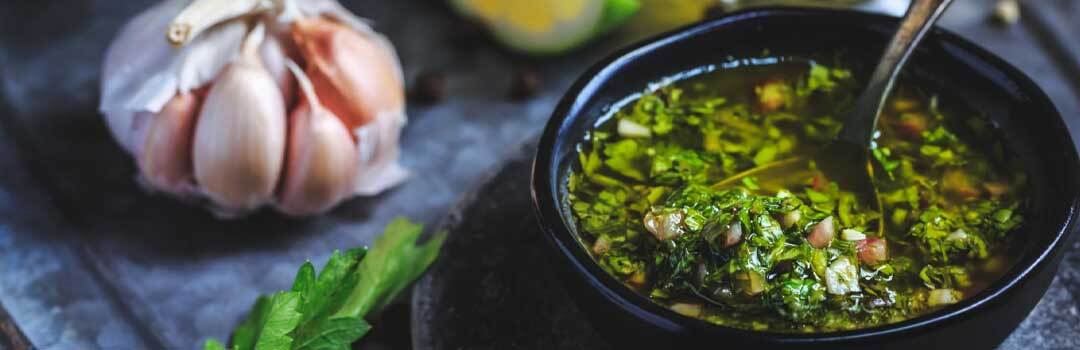
Chef's BBQ Chimichurri Recipe
A fresh chimichurri is one of those sauces every barbecue cook should have in their repertoire. It takes just a few minutes to prepare and works beautifully with steak, chicken, lamb, vegetables and grilled seafood.
Ingredients:
- 1 large bunch flat-leaf parsley, finely chopped
- 2 cloves garlic, crushed
- 1 tsp dried oregano
- ½ tsp chilli flakes
- 2 tbsp red wine vinegar
- 100ml extra virgin olive oil
- Maldon Sea Salt
- Freshly cracked black pepper
Method:
- Mix the parsley, garlic, oregano and chilli flakes in a bowl.
- Stir through the red wine vinegar.
- Slowly whisk in the olive oil until combined.
- Season with sea salt and black pepper to taste.
- Leave for at least 15 minutes before serving to allow the flavours to develop.
Chef's Tip: Spoon over rested steak, grilled lamb, barbecued vegetables or roasted new potatoes for an instant burst of freshness.
Continue Your BBQ Journey
If you've enjoyed this guide, there are plenty of ways to take your outdoor cooking even further.
Explore our range of Monolith Ceramic Grills, Pit Barrel Cookers, meat thermometers, artisan seasonings, premium sauces and carefully selected barbecue essentials, all chosen because they're products we genuinely enjoy using ourselves.
The best barbecues aren't measured by how expensive the equipment is or how many dishes are on the table. They're remembered because family stayed a little longer, friends asked for the recipe, and everyone left already looking forward to the next one.
We hope this guide gives you the confidence to light the barbecue more often, try something new and enjoy every moment of cooking outdoors.
From all of us at Infusions4Chefs, have a fantastic summer and happy barbecuing.