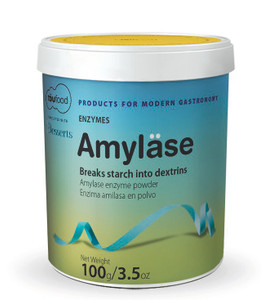
Toufood Lipase Powder 100g
£9.99
(Inc. VAT)
£9.99
(Ex. VAT)

Toufood Cellulase Powder 100g is a specialist enzyme complex designed to break down cellulose, the structural material found in the cell walls of fruits, vegetables and other plant foods. By acting directly on cellulose, it can soften and liquefy plant tissue, help clarify juices and make normally tough parts of fruit and vegetables easier to work with while retaining their fresh flavour.
Cellulase is particularly interesting for modern gastronomy and experimental cooking because it changes texture without relying on conventional cooking. It can be used to soften raw fruit and vegetables, extract more liquid from plant ingredients and explore unusual textures using peels and other cellulose-rich parts that would normally be difficult to eat.
The powder can be applied directly to an ingredient or diluted before use, with techniques including vacuum impregnation and syringe injection allowing the enzyme to penetrate the food more effectively.
Key Features:
Recipe Inspiration:
Why does Cellulase only work with certain ingredients?
Cellulase specifically targets cellulose, a major component of plant cell walls. Its effectiveness therefore depends on the food containing cellulose; it will not perform the same function on ingredients whose structure comes primarily from proteins, fats or starches.
What is the difference between Cellulase and Amylase in cooking?
The two enzymes target different substances. Cellulase breaks down cellulose within plant cell walls, whereas Amylase acts on starch and converts it into smaller sugars. This means Cellulase is particularly relevant to the structure of fruit and vegetables, while Amylase is useful when manipulating starch-rich preparations.
Why is vacuum impregnation used with culinary enzymes?
Vacuum impregnation can help a liquid enzyme preparation penetrate the porous structure of suitable fruit and vegetables more effectively. This provides greater contact between the enzyme and the plant tissue than simply coating the outside of a larger piece.
Ingredients:
Maltodextrin, beta-glucanase, cellulase, E-211, E-551.
Allergens highlighted in BOLD.
|
Suitable for a Vegetarian diet |
N |
|
Suitable for a Vegan diet |
N |
|
Suitable for Coeliacs |
N |
Please be aware that ingredients, including allergens, are subject to change. At Infusions4chefs, we consistently update our product database and strive to provide accurate allergen information for each product. If you have concerns about allergens, we strongly advise checking the product label before using it.