
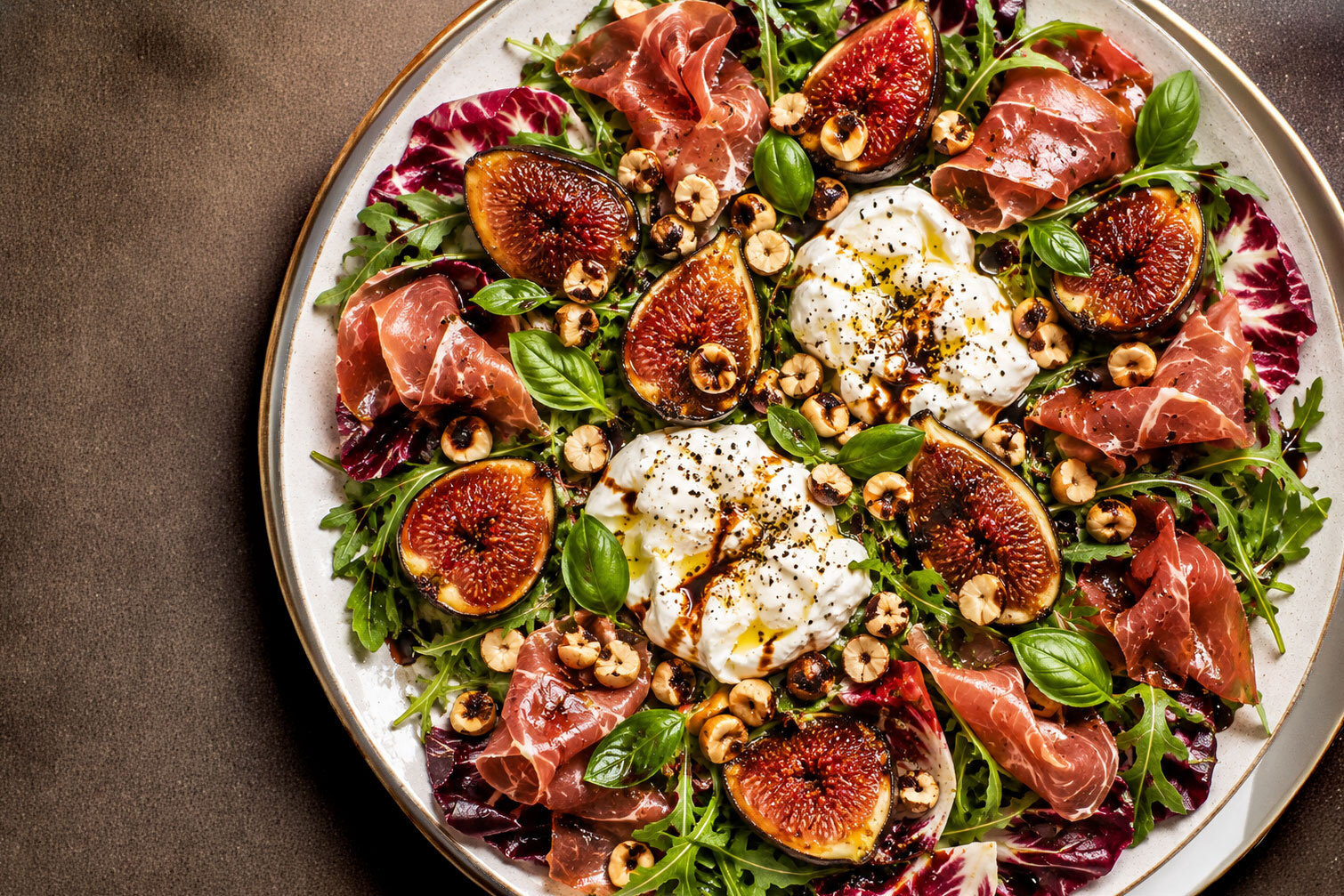
Sweet roasted figs, creamy burrata, salty prosciutto and toasted hazelnuts make this Roasted Fig, Burrata & Balsamic Salad perfect for that delicious crossover between late summer and early autumn. The figs are roasted until warm and jammy, then paired with peppery leaves and a simple balsamic dressing that catches all those sticky roasting juices.
Rather than using the figs raw, roasting them is what makes our version particularly good. A little balsamic added before they go into the oven concentrates their natural sweetness and creates caramelised edges, while keeping the centres beautifully soft. Served warm against cool, pillowy burrata, you get a salad that's fresh enough for an August lunch but has all the richer flavours you start craving as September arrives.
At Infusions4chefs, this is exactly where we think a really good balsamic vinegar earns its place. There aren't lots of competing flavours or a complicated dressing to hide behind – the balsamic, figs and extra virgin olive oil do most of the work.
Why You'll Love This Roasted Fig & Burrata Salad
- Perfect for late summer. Fresh figs are the star, with slightly richer flavours making the salad ideal for the transition into autumn.
- Roasting transforms the figs. They become softer, sweeter and almost jammy, with lightly caramelised edges.
- Creamy, crunchy, sweet and salty. Burrata, prosciutto, hazelnuts and roasted figs give every mouthful something different.
- Balsamic is more than a dressing. It's used to roast the figs as well as finish the salad, carrying their sticky juices across the plate.
- Minimal cooking required. Most of the preparation is simply assembling good ingredients.
- Beautiful enough for entertaining. Serve it on one large platter and let everyone help themselves.
What Is Roasted Fig & Burrata Salad?
Roasted Fig & Burrata Salad combines fresh figs roasted until soft and jammy with Italian burrata, salad leaves and a balsamic dressing.
Burrata works particularly well with figs because its cool, creamy centre balances their concentrated sweetness. Balsamic vinegar brings acidity, while prosciutto adds saltiness and toasted hazelnuts provide crunch.
It's a particularly good way to use fresh figs when they're ripe but still firm enough to hold their shape during roasting.
Roasted Fig, Burrata & Balsamic Salad Recipe
Serves: 4
Prep Time: 10 minutes
Cook Time: 12–15 minutes
Total Time: 25 minutes
Difficulty: Easy
Ingredients
For the Roasted Figs
- 8 fresh figs
- 1 tbsp extra virgin olive oil
- 1 tbsp good-quality balsamic vinegar
- Freshly cracked black pepper
For the Salad
- 2 x 125g burrata
- 80g rocket
- Small handful radicchio leaves
- 8 slices prosciutto
- 50g hazelnuts
- Small handful fresh basil leaves
For the Balsamic Dressing
- 3 tbsp extra virgin olive oil
- 1 tbsp balsamic vinegar
- 1 tsp Dijon mustard
- Sea salt
- Freshly cracked black pepper
- Juices from the roasted figs
Method
- Preheat the oven to 190°C fan.
- Cut the figs in half from top to bottom and arrange them cut-side up on a small roasting tray.
- Drizzle with the olive oil and balsamic vinegar, then finish with a little freshly cracked black pepper.
- Roast for 12–15 minutes until the figs have softened and their cut surfaces are glossy and beginning to caramelise. They should still retain their shape rather than collapsing completely.
- Meanwhile, add the hazelnuts to a dry frying pan and toast over a medium heat until golden and fragrant. Allow to cool slightly before roughly chopping.
- Carefully transfer the roasted figs to a plate. Don't discard the syrupy balsamic and fig juices left behind on the roasting tray.
- To make the dressing, whisk together the extra virgin olive oil, balsamic vinegar and Dijon mustard. Add the warm juices from the roasting tray and season with sea salt and black pepper.
- Arrange the rocket and radicchio loosely across a large serving platter.
- Tear the burrata open and nestle it amongst the leaves, allowing some of the creamy centre to spill naturally onto the plate.
- Arrange the warm roasted figs and loosely folded prosciutto around the burrata.
- Spoon the balsamic dressing across the salad, concentrating some around the figs and burrata.
- Finish with the toasted hazelnuts, torn basil leaves and plenty of freshly cracked black pepper. Serve while the figs are still slightly warm.
How to Roast Figs Without Them Falling Apart
Fresh figs become incredibly soft when heated, so the aim isn't to roast them for a long time.
Choose figs that are ripe but still have a little firmness when gently pressed. Very soft, overripe figs are delicious eaten fresh but can collapse quickly in the oven.
Cutting the figs in half rather than quarters also helps them retain their shape. Roast them cut-side up and remove them once the centres are warm and jammy and the exposed surface has begun to caramelise.
You want soft edges and a luscious centre, not fig purée.
Why Balsamic Vinegar Works So Well with Figs
Figs and balsamic share naturally sweet, fruity characteristics, but balsamic also provides the acidity needed to stop the finished salad becoming overly rich.
Roasting the figs with a small amount of balsamic concentrates both flavours. As the figs warm, they release their own juices into the roasting tray, creating a sticky mixture that can then become part of the dressing.
This is also a recipe where the quality of your balsamic really matters. There are relatively few ingredients competing for attention, so choose one with a good balance of sweetness and acidity rather than relying on a heavily sweetened glaze.
Why Burrata Rather Than Mozzarella?
Mozzarella would certainly work, but burrata brings something different.
Cut through the mozzarella-like outer shell and you'll find a much softer centre of stracciatella and cream. That rich interior spreads naturally across the plate and effectively becomes part of the dressing when mixed with balsamic and the warm fig juices.
Rather than neatly slicing it, tear the burrata open at the table and let everything mingle.
Ingredient Swaps
- No hazelnuts? Toasted walnuts or pistachios both work beautifully with figs and burrata.
- No radicchio? Use rocket on its own or introduce another slightly bitter salad leaf.
- No prosciutto? The salad still works without it. Add a few more toasted nuts for extra texture.
- Want a different cheese? Creamy goat's cheese is particularly good with roasted figs, although you'll lose the characteristic soft centre of the burrata.
- No fresh basil? A few fresh thyme leaves work particularly well if you want to push the salad further towards autumn.
What to Serve with Fig & Burrata Salad
Serve the salad with thick slices of grilled sourdough rubbed lightly with garlic and drizzled with extra virgin olive oil. The bread is perfect for scooping up the burrata, balsamic and sticky fig juices left behind on the plate.
As part of a larger spread, it works beautifully alongside antipasti, marinated olives and roasted vegetables.
It can also make a fantastic starter for an early-autumn dinner, particularly before a simple risotto, roast chicken or pasta dish.
What Else Can You Make with Fresh Figs?
Fresh figs work in far more than desserts.
Serve them on sourdough with goat's cheese, add them to cheeseboards, wrap them in prosciutto or roast them alongside pork and chicken.
For something sweet, pair figs with mascarpone, honey, pistachios or dark chocolate, or roast them until soft and spoon over vanilla ice cream.
Questions and Answers
When are fresh figs in season in the UK?
Fresh figs are particularly associated with late summer and early autumn, making August and September an excellent time to look for them. Exact availability varies according to variety, origin and growing conditions.
How can you tell when a fresh fig is ripe?
A ripe fig should feel slightly soft when gently pressed and have a sweet aroma. Avoid squeezing it firmly, as ripe figs bruise easily. For roasting, choose fruit that's ripe but still firm enough to hold its shape.
Do you need to peel fresh figs before eating them?
No. The skin of fresh figs is edible, so there's no need to peel them for this salad. Simply wash the fruit gently, remove the hard tip of the stem if necessary and cut the figs in half.
Can you eat burrata cold?
Yes, but its flavour and texture are generally more enjoyable when it isn't fridge-cold. Taking burrata out of the fridge a little before serving allows its creamy centre to soften.
What's the difference between balsamic vinegar and balsamic glaze?
Balsamic vinegar is a vinegar, while products sold as balsamic glaze are typically thicker and sweeter preparations designed for drizzling. For this recipe, balsamic vinegar is preferable because its acidity is important for balancing the sweet figs and rich burrata.