
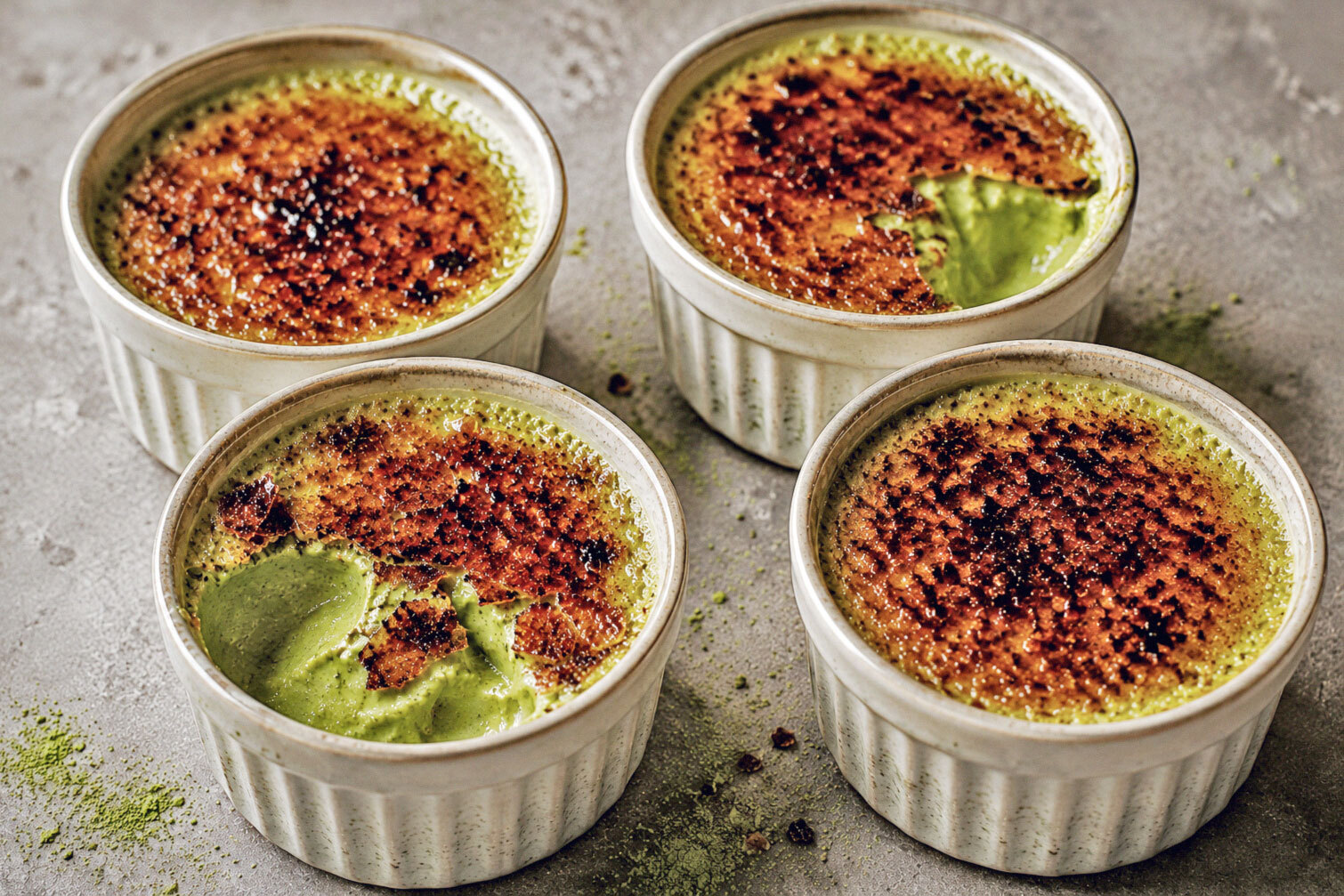
Matcha Crème Brûlée takes everything that makes the classic French dessert so good – silky baked custard and that satisfyingly brittle caramelised sugar top – and introduces the earthy, slightly bitter flavour of Japanese matcha.
It’s a combination that makes sense beyond simply looking beautiful. Matcha cuts through the richness of the cream and sweetness of the custard, while the dark caramel notes of the burnt sugar work brilliantly with its more savoury, grassy character.
The real pleasure comes when you crack through that thin caramel shell with a spoon and reveal the smooth pale-green matcha custard underneath.
Why You’ll Love This Matcha Crème Brûlée
- A classic with a genuine twist. Matcha changes both the flavour and appearance without losing what makes crème brûlée so recognisable.
- Beautiful contrast. Cool, creamy custard sits underneath a crisp, freshly caramelised sugar crust.
- Balanced rather than overly sweet. Matcha’s natural bitterness provides contrast against cream, vanilla and caramel.
- Made for entertaining. The custards can be prepared ahead, leaving just the sugar to caramelise before serving.
- That crack. Few desserts have a better first spoonful.
What Is Matcha Crème Brûlée?
Matcha Crème Brûlée is a variation of traditional crème brûlée made by incorporating finely powdered Japanese green tea into a cream and egg-yolk custard.
The custard is gently baked in a water bath until just set, then chilled. Immediately before serving, a thin layer of sugar is scattered across the surface and caramelised until hard and glass-like.
The result is three distinct sensations: crisp caramel, silky custard and the distinctive earthy flavour of matcha.
Matcha Crème Brûlée Recipe
Serves: 6
Prep Time: 15 minutes
Cook Time: 35–40 minutes
Chilling Time: 4 hours
Difficulty: Medium
Ingredients
- 500ml double cream
- 1 tsp vanilla bean paste
- 2–3 tsp matcha powder, depending on desired intensity
- 6 large egg yolks
- 70g caster sugar
- Pinch of fine sea salt
- 6 tsp caster or demerara sugar, for caramelising
Method
- Preheat the oven to 140°C fan.
- Pour the double cream into a saucepan and add the vanilla bean paste. Heat gently until steaming but don't allow it to boil.
- Sift the matcha into a small bowl. Add a few tablespoons of the warm cream and whisk until completely smooth. This prevents lumps of matcha appearing in the finished custard.
- Whisk the matcha mixture back into the remaining warm cream.
- In a separate bowl, gently whisk the egg yolks, caster sugar and salt together. Avoid incorporating too much air.
- Slowly pour the warm matcha cream over the yolks while whisking continuously.
- Pass the custard through a fine sieve into a jug. Allow it to stand briefly, then skim away any foam from the surface.
- Divide between six shallow ramekins.
- Place the ramekins in a deep roasting tray and pour hot water around them until it reaches approximately halfway up their sides.
- Bake for 35–40 minutes. The edges should be set while the centres retain a gentle wobble.
- Carefully remove the ramekins from the water bath. Cool to room temperature before refrigerating for at least 4 hours.
- When ready to serve, sprinkle approximately 1 teaspoon of sugar in a thin, even layer over each custard.
- Caramelise using a cook's blowtorch until deeply golden and glass-like. Leave for a minute or two so the caramel can harden.
- Serve immediately and crack through the caramel crust with the back of a spoon.
How to Get Perfectly Smooth Matcha Custard
Matcha doesn't dissolve in liquid in quite the same way as sugar. It remains suspended, which means tipping powder directly into a large quantity of cream can leave stubborn little green lumps.
Sifting the matcha first and whisking it with a small amount of warm cream creates a smooth paste before it's incorporated into the custard.
Passing the finished mixture through a fine sieve gives you another opportunity to remove any remaining particles or pieces of cooked egg.
And keep the temperature gentle. Crème brûlée should be baked slowly rather than aggressively cooked.
How Do You Know When Crème Brûlée Is Cooked?
Don't wait for the centre to become completely firm.
Gently move the ramekin and look at the custard. The outer edges should appear set, while the centre should wobble slightly.
Residual heat continues cooking the custard after it leaves the oven, and it will become considerably firmer as it chills.
Overbaking is one of the easiest ways to lose that beautifully smooth texture.
How Much Matcha Should You Use?
Matcha varies considerably in intensity, so there's no single quantity that suits every powder.
Around 2 teaspoons gives the custard a more delicate matcha character, while 3 teaspoons creates a noticeably stronger result.
Taste matters more than achieving the brightest possible green colour. Adding excessive matcha purely for appearance can make the finished dessert unpleasantly bitter.
Questions and Answers
Why does matcha need to be sifted before using it in desserts?
The very fine particles compact easily and can form small clumps. Sifting before mixing makes it considerably easier to disperse the matcha evenly through creams, batters and custards.
Why is crème brûlée cooked in a water bath?
The surrounding hot water moderates the heat reaching the ramekins, allowing the egg custard to cook more gently and evenly. This reduces the risk of the edges overcooking before the centre has set.
Which sugar is best for the top of crème brûlée?
Fine caster sugar melts quickly and evenly, making it particularly easy to caramelise. Demerara can provide a slightly deeper caramel flavour but its larger crystals can take longer to melt.
Can you caramelise crème brûlée without a blowtorch?
A very hot grill can be used, although it provides less control. Place thoroughly chilled custards close to the grill and watch them continuously as the sugar can move from caramelised to burnt very quickly.
Why has my crème brûlée turned grainy?
Graininess usually indicates that the egg proteins have become too hot and coagulated excessively. Gentle oven temperatures, a water bath and removing the custards while their centres still wobble all help maintain a smooth texture.